
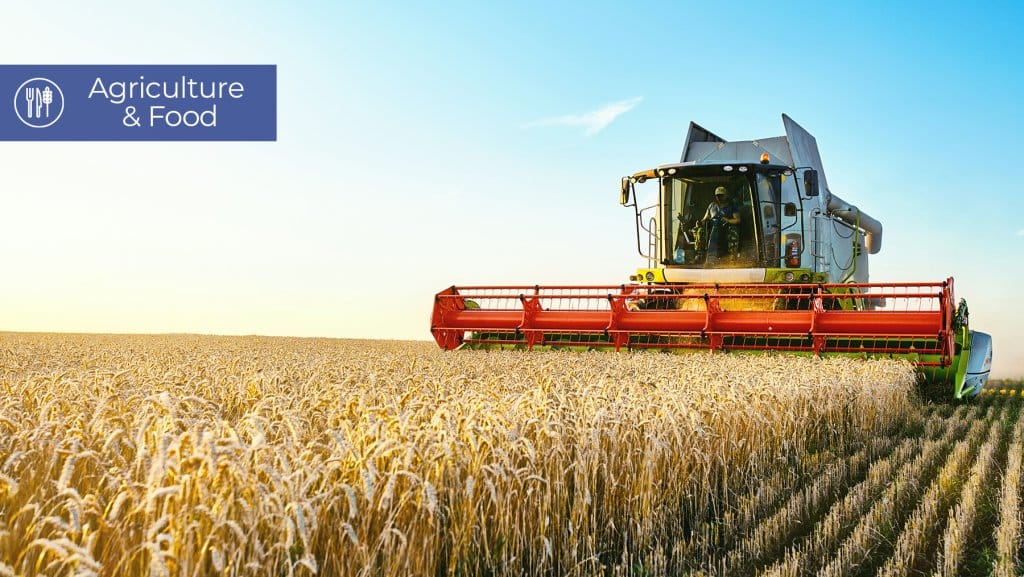
As climate change intensifies, the agricultural sector faces unprecedented challenges that require innovative, sustainable solutions. From advanced technologies to adaptive farming practices, InterSearch’s Agriculture & Food Practice Group is actively exploring how to navigate these new realities. Micheál Coughlan, Global Leader of the group, highlights the importance of these efforts:
“The path to sustainable agriculture is fraught with challenges but essential to climate resilience. Through a collaborative approach and cutting-edge technology, we are shaping a future where agriculture remains resilient and climate-friendly.”
Addressing Climate Change with Technology and Sustainable Practices
As the impacts of climate change intensify, agriculture is facing unprecedented challenges worldwide. Increasingly unpredictable weather patterns, from unseasonably warm winters to more frequent heavy rains, are disrupting traditional farming cycles and straining water resources. Farmers in Europe, much like their counterparts globally, are now navigating a changing landscape that requires new, sustainable practices to protect both their livelihoods and the environment. From soil preservation and regenerative grazing to advanced agri-tech solutions that optimize water and nutrient use, farmers globally are pioneering innovative ways to adapt.
This article explores how these efforts, supported by advancements in agricultural technology and cross-border collaboration, are shaping a more resilient future for food systems globally.
The Climate Challenge in Agriculture – Ireland Case Study
Agriculture’s impact on greenhouse gas emissions is significant and distinct from other sectors. While carbon dioxide (CO₂) from fossil fuels is the primary greenhouse gas in many industries, agriculture emits a unique combination of methane (CH₄) and nitrous oxide (N₂O). Methane, which accounts for a large portion of agricultural emissions, is primarily released by livestock, while nitrous oxide is mainly emitted through the application of nitrogen-based fertilizers. For example, in a country like Ireland, agriculture currently contributes 37% of the country’s total greenhouse gas emissions.
Ireland’s agricultural emissions profile creates a unique challenge. Irish farmers must not only manage these emissions but also adapt to increasingly extreme weather conditions, from heavy rainfall to unusual droughts, which affect crop productivity and soil health. In response, Ireland has implemented a series of measures to help reduce the carbon footprint of agriculture. These initiatives include improved nutrient management, reduced reliance on synthetic fertilizers, and sustainable livestock practices. Together, these strategies aim to support a 25% reduction in agricultural emissions by 2030 (baseline year 2018), a target in line with both Ireland’s Climate Action Plan and the broader EU Green Deal goals.
Sustainable Innovations in Farming
In response to these goals, farmers, supported by governments, are adopting climate-smart practices. Guidance is provided on practices that reduce emissions, such as better nutrient management and reduced fertilizer use. Farmers are also turning to carbon farming, a practice that involves enhancing soil health to trap carbon dioxide, and biodiversity preservation initiatives, which allocate portions of farmland for natural ecosystems to flourish. These measures not only aim to reduce emissions but also enhance resilience, helping farms withstand extreme weather events like floods and droughts that are becoming increasingly common worldwide.
Agri-Tech’s Role in Climate Resilience
Technology is rapidly transforming agriculture, particularly in areas with high climate risk. Digital platforms leverage data analytics and precision farming to optimize resource use, ensuring that crops receive the exact nutrients they need without excess fertilizer. Additionally, advanced irrigation systems, sensors, and drones enable farmers to monitor crops in real-time, ensuring efficient water usage and reducing waste. In the dairy sector, climate-neutral beef certification systems are being developed, which will serve as a model for emission reduction in livestock farming globally.
“India’s AgFoodTech sector exemplifies the power of innovation in navigating challenges such as funding constraints and climate impact. Precision and digital agriculture, post-harvest technologies, and climate-resilient practices like carbon farming are paving the way for a more sustainable future. These advancements, coupled with strategic partnerships, underscore the sector’s potential to address global food security and environmental goals,” shares Srimanto Bhattacharya, Asia Pacific Regional Leader of the Agriculture and Food Practice Group of InterSearch Worldwide.
Claire Le Lem, Europe Regional Leader for the Agriculture & Food Practice Group, shares insights on the climate-related challenges facing agriculture in France. These challenges, which are also relevant to much of Europe, reflect broader regional shifts in agricultural practices due to climate impacts:
- Water and Soil Management: Efforts focus on sustainable practices to preserve water resources and soil health, crucial for supporting biodiversity and maintaining soil quality.
- Changing Production Regions: Climate change may necessitate shifts in production areas. For instance, certain crops are now moving northwards, evidenced by the reintroduction of vineyards in Brittany after centuries.
- Income and Structural Stability: Increased income variability and weaker structural supports underscore the need for forward-looking agricultural policies that guide regional production systems.
This perspective highlights issues that are pressing not only in France but are increasingly seen across Europe. The region’s shared challenges emphasize the need for cross-border collaboration and adaptive strategies in agricultural policy and practice.
A Global Vision for Sustainable Agriculture
Europe’s journey in climate-resilient agriculture reflects a broader global trend. The European Union’s Green Deal and initiatives like EIT Climate-KIC emphasize collaborative efforts to foster sustainable agriculture and bioeconomy solutions across Europe. Through these programs, EU countries are building frameworks for resource-efficient farming, supporting a shift to regenerative practices that restore soils and reduce reliance on synthetic inputs.
The integration of technology in agriculture holds promise for reducing emissions, improving productivity, and achieving sustainability goals. With support from initiatives like the EU’s Circular Bioeconomy models, farmers are experimenting with circular practices, ensuring that all organic waste is repurposed, either as fertilizer or an energy source (anaerobic digesters). Such closed-loop systems enhance sustainability while providing additional revenue streams for farmers, a model that could be adopted globally.
Looking Ahead
The path to sustainable agriculture is fraught with challenges but is essential to climate resilience. With its collaborative approach, the EU is setting a precedent for climate-smart farming that integrates cutting-edge technology, stakeholder cooperation, and environmental stewardship. As farmers continue to innovate, agri-tech and sustainable practices will be crucial in shaping a resilient and climate-friendly agricultural future.
Partner with InterSearch Worldwide’s Agriculture & Food Practice Group to explore innovative strategies and connect with experts who can help your business thrive in the face of climate challenges. Together, we can shape a sustainable future for agriculture. Contact us today to learn more.

 English
  Spanish